If you have ever hesitated before smiling in a wedding photo or a work headshot, you are not alone. Many people in Singapore want straighter teeth without the “metal-mouth” look of their school days, which is one reason Invisalign has become one of the most searched dental treatments in the country. Yet Invisalign, dental braces and veneers are often confused with one another, even though only two of them actually straighten teeth. This guide explains, in plain language, how each option works, what it really costs, and how senior doctors help you choose the approach that gives a natural, lasting result.
What Is Invisalign and How Does It Work?
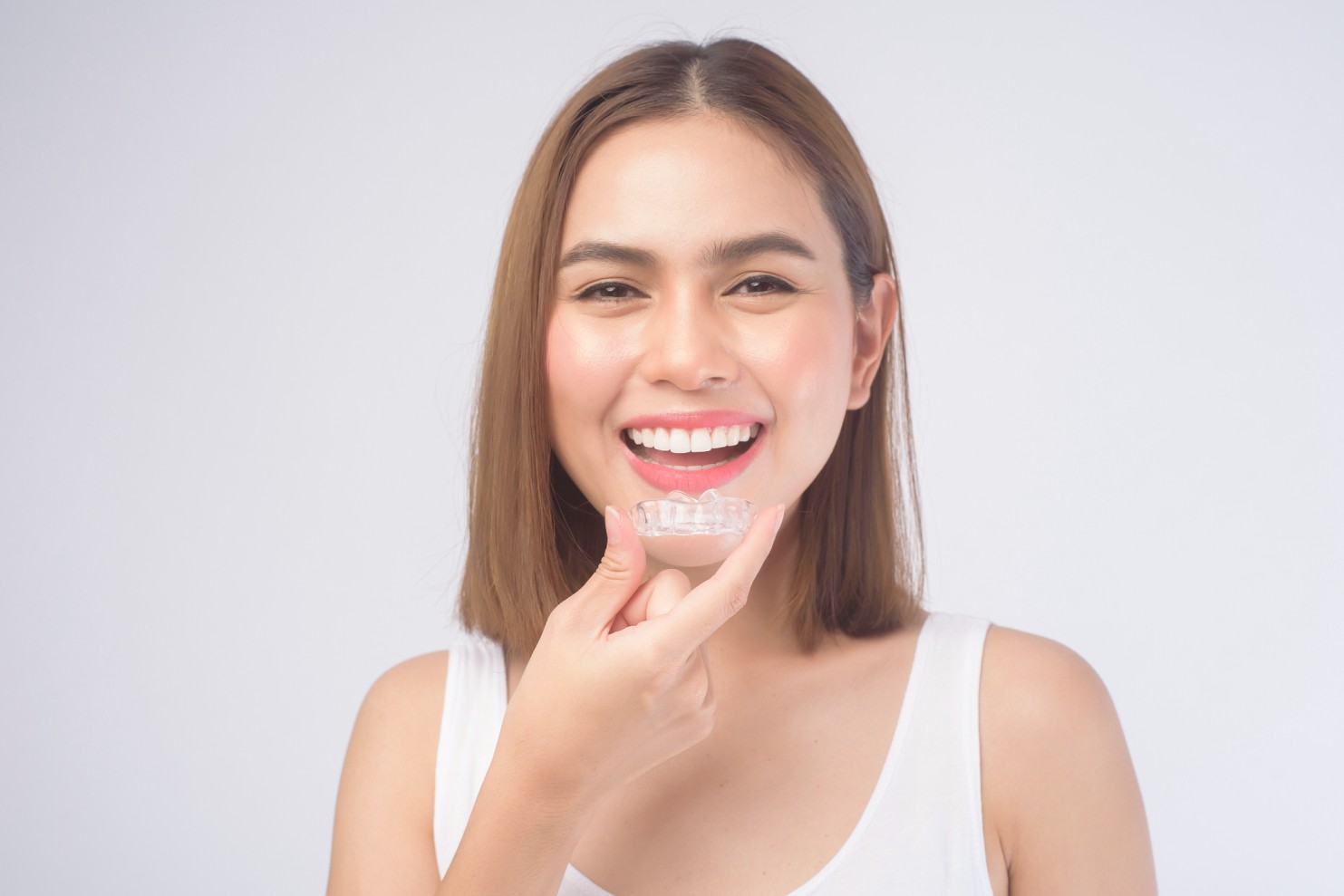
Invisalign is a system of custom-made, near-invisible clear aligners that gently move your teeth into position over time. Instead of fixed brackets and wires, you wear a smooth, transparent tray that is swapped for the next one roughly every one to two weeks, with each tray nudging your teeth a fraction closer to the planned result. Because the aligners are removable, you simply take them out to eat, to drink anything other than water, and to brush and floss, then slip them back in.
For treatment to stay on schedule, the trays must be worn 20 to 22 hours a day. This is why Invisalign suits disciplined adults who want a discreet option they can wear confidently in meetings or in front of clients.
Invisalign vs Braces: Which One Suits You?
When people compare Invisalign vs braces, they usually focus on appearance, but the more important differences run deeper. Dental braces use metal or ceramic brackets bonded to each tooth and joined by a wire that is tightened over the course of treatment. Because they are fixed in place, dental braces work 24 hours a day and do not rely on your willpower, which makes them highly predictable for complex bite problems and for teenagers who might forget to wear removable trays.
Invisalign offers discretion and freedom at mealtimes, but its results depend on consistent wear. So in any Invisalign vs braces decision, the honest answer is that the “best” choice is the one that matches both your dental complexity and your daily habits.
| Feature | Invisalign | Dental Braces | Veneers |
| What it does | Moves natural teeth | Moves natural teeth | Covers the front surface |
| Appearance | Near-invisible | Visible (metal) / subtle (ceramic) | Natural, instant |
| Comfort | Smooth, removable | Fixed, can rub | No tooth movement |
| Best for | Mild–moderate cases, adults | Complex bites, teens | Chips, shape, colour |
| Typical duration | 12–18 months | 18–24 months | 2–3 visits |
| Singapore cost | S$4,500–S$9,500+ | S$3,000–S$7,000 | Varies per tooth |
Aligners vs Veneers: Straightening or Masking?

Here is the distinction that saves patients the most money and regret: aligners move your natural teeth, while veneers cover them. When you weigh aligners vs veneers, you are really choosing between correction and camouflage. Clear aligners are the right tool when teeth are crowded, gapped or slightly rotated, because they correct the underlying position. Veneers, thin shells bonded to the front of the teeth, are better suited to chips, worn edges, stubborn discolouration or reshaping, and they deliver a result in only a few visits.
Sometimes the most elegant plan combines both: aligners first to build a healthy, well-aligned foundation, then veneers to perfect shape and shade. If you are weighing cosmetic options, our guide on dental veneers vs teeth whitening is a useful next read, and you can explore the full treatment on our veneers page.
How Much Does Invisalign Cost in Singapore?
Cost is often the deciding factor, and this is where local context matters. In Singapore, Invisalign typically ranges from about S$4,500 to S$9,500 or more, with simple “Express” cases starting near S$3,900 and complex full-arch treatment reaching around S$10,500. Traditional dental braces are usually a little cheaper at roughly S$3,000 to S$7,000, while budget clear aligner brands can start lower again. One point surprises many patients: MediSave and CHAS do not cover Invisalign or braces, because orthodontics is classified as elective and aesthetic under Ministry of Health guidelines. Some corporate insurance riders do offer partial orthodontic coverage, so it is always worth checking your own policy.
| Option | Typical Singapore Cost |
| Invisalign Express (minor cases) | from ~S$3,900 |
| Invisalign (moderate–comprehensive) | S$4,500–S$10,500+ |
| Metal / ceramic dental braces | S$3,000–S$7,000 |
| Budget clear aligners | from ~S$2,200 |
What Affects Your Final Price?
The biggest driver is complexity: minor spacing is quick to fix, while rotations and bite correction need more aligners and more time. Provider experience, the total number of trays, and any pre-treatment work such as extractions all shift the number.
Hidden Costs to Check Before You Sign
Always ask what a quote includes. Refinement aligners, retainers, X-rays, scans and GST can quietly change the final figure, so a “cheaper” package is not always cheaper once everything is added.
What to Expect: Treatment Time and Daily Life
Most Invisalign journeys take 12 to 18 months, though minor touch-ups can finish in as little as three to six months, and complex cases may run closer to two years. Expect small tooth-coloured “attachments” that help the trays grip your teeth, mild pressure for a day or two after each new set, and a retainer afterwards to protect your result. For busy Singaporeans, part of the appeal is that clear aligners usually need fewer and shorter clinic visits than dental braces.
Choosing the Right Provider in Singapore
Look Beyond the Price Tag
A refined smile is a medical outcome, not simply a product. Whether you see a general dentist or an orthodontist, what matters most is a thorough assessment, precise digital planning and honest advice on whether aligners, dental braces or veneers genuinely suit your case. Be cautious of mail-order or DIY aligners that skip an in-person diagnosis, as they can cause lasting damage to your teeth and gums.
The ADS Clinic Approach
At ADS Clinic, our senior doctors focus on personalised, natural-looking results in a premium, safety-first setting. We assess your smile as part of your whole face, so your teeth, jawline and features remain in harmony rather than treating one feature in isolation.
Invisalign in Singapore: Frequently Asked Questions
Is Invisalign painful?
Most people feel only mild pressure for a day or two with each new tray, a sign the teeth are moving rather than sharp pain.
Is Invisalign or braces faster?
It depends on the case. For minor concerns, clear aligners can be quicker; for complex bites, dental braces are often more efficient.
Can I use MediSave for Invisalign or braces?
No. Orthodontics is considered elective, so MediSave and CHAS do not apply. Check corporate insurance riders for any partial coverage.
Can Invisalign fix crowding and gaps?
Yes. Mild to moderate crowding, spacing and rotations respond well. Severe bite problems may still be better treated with braces.
Do I need to wear a retainer afterwards?
Yes. Teeth naturally drift over time, so a retainer is essential to keep your new smile stable for the long term.
Ready for a Straighter Smile?
Invisalign, dental braces and veneers solve different problems: aligners and braces straighten your natural teeth, while veneers refine their shape and shade. The right path depends on your teeth, your lifestyle and your goals, and the surest way to know is a professional assessment. To find out which option gives you the most natural result, book a consultation with ADS Clinic and let our senior doctors design a plan around your smile.