Patients considering FaceTite often hope to achieve a sharper, more refined jawline without undergoing a full surgical facelift. However, while some patients experience noticeable contour improvement after treatment, others may still see mild jowl formation or less definition than expected. This difference is usually linked to factors such as skin elasticity, collagen response, facial structure, and treatment planning rather than the procedure alone.
At A.D.S Clinic, doctors assess lower-face anatomy carefully before recommending FaceTite, AccuTite, facelift procedures, or complementary treatments such as Morpheus8 to achieve balanced and natural-looking results.
Why Jawline Definition Is More Complex Than Simply Removing Fat
Lower-face ageing is not caused by fat alone
One of the biggest misconceptions surrounding jawline contouring is the belief that fullness is the only issue. In reality, lower-face ageing is influenced by several structural changes occurring simultaneously:
- Skin laxity
- Collagen loss
- Tissue descent
- Bone support reduction over time
This is why two patients with similar facial fullness may respond very differently to FaceTite.
Why slimmer faces can still develop jowls
Many patients are surprised when they develop jowl formation despite having relatively slim faces. In these cases, the concern is often not excess fat, but weakened tissue support and reduced skin recoil. As collagen declines with age, the lower face becomes less defined even if there is minimal fat present.
Fullness and sagging are not the same issue
A fuller lower face may benefit from fat reduction, while sagging requires tightening and support. Understanding this distinction is critical before recommending:
- FaceTite
- AccuTite
- Facelift
- Double chin removal
This is also why patients exploring facial contouring may benefit from reading Buccal Fat Removal vs Cheek Fat Removal to better understand how doctors assess facial volume and structure holistically.
What FaceTite Actually Targets Beneath the Skin
Radiofrequency-assisted tissue contraction
FaceTite uses radiofrequency-assisted energy to tighten tissue beneath the skin while encouraging collagen remodelling. Unlike surface-only treatments, it works deeper within the tissue layers where structural laxity begins.
Why collagen response varies between patients
Not every patient produces collagen at the same rate. Several factors influence how effectively the skin tightens after FaceTite:
- Age
- Skin thickness
- Smoking history
- Sun exposure
- Existing collagen reserve
Patients with stronger skin elasticity typically achieve more defined jawline outcomes.
Why FaceTite is popular for jawline refinement
FaceTite is commonly recommended for:
- Early jowl softening
- Mild-to-moderate lower-face laxity
- Jawline contour enhancement
- Supportive double chin removal treatments
Patients seeking dramatic lifting, however, may require additional approaches.
Why Some FaceTite Treatments Produce Sharper Jawlines Than Others
Skin elasticity plays a major role
Skin quality is one of the most important predictors of outcome. Even when fat reduction is successful, poor skin recoil can limit visible jawline definition.
Excess fat and excess skin require different strategies
Patients sometimes focus only on reducing fullness. However, removing volume without addressing loose skin can create a softer or heavier appearance afterward. This is one reason why some patients feel their jawline remains undefined despite treatment.
Treatment depth and energy placement matter
FaceTite outcomes also depend heavily on treatment precision. Experienced doctors carefully control:
- Energy depth
- Treatment zones
- Tissue contraction levels
This helps avoid uneven tightening or over-treatment.
Facial anatomy differs between patients
Asian facial structures commonly seen in Singapore often involve:
- Fuller lower-face proportions
- Thicker skin layers
- Broader jaw structures
These anatomical differences influence how FaceTite and AccuTite are planned for natural-looking refinement.
Why Some Patients Still Develop Jowls After Face Slimming Treatments
Fat reduction without structural support
One of the most overlooked causes of post-treatment sagging is removing volume without supporting the surrounding tissue. This may reveal pre-existing laxity that was previously hidden by facial fullness.
Natural collagen decline affects long-term firmness
Collagen production naturally slows with age, reducing the skin’s ability to contract after slimming procedures.
Aggressive slimming can worsen lower-face ageing
Excessive volume reduction may create:
- Hollowing
- Soft tissue descent
- More visible jowl formation
This is why experienced doctors often prefer gradual and balanced contouring.
Assessing suitability for jowl removal
Not all jowl concerns are suitable for minimally invasive tightening alone. Mild-to-moderate laxity may respond well to FaceTite, while more advanced sagging may require a facelift approach.
FaceTite vs Morpheus8 vs Facelift What Is The Difference
| Concern | Most Suitable Approach |
| Mild lower-face laxity | FaceTite |
| Surface skin texture and collagen support | Morpheus8 |
| Smaller precision tightening areas | AccuTite |
| Significant skin sagging | Facelift |
| Early jawline softening | Double chin removal with FaceTite |
Deep tightening vs surface collagen stimulation
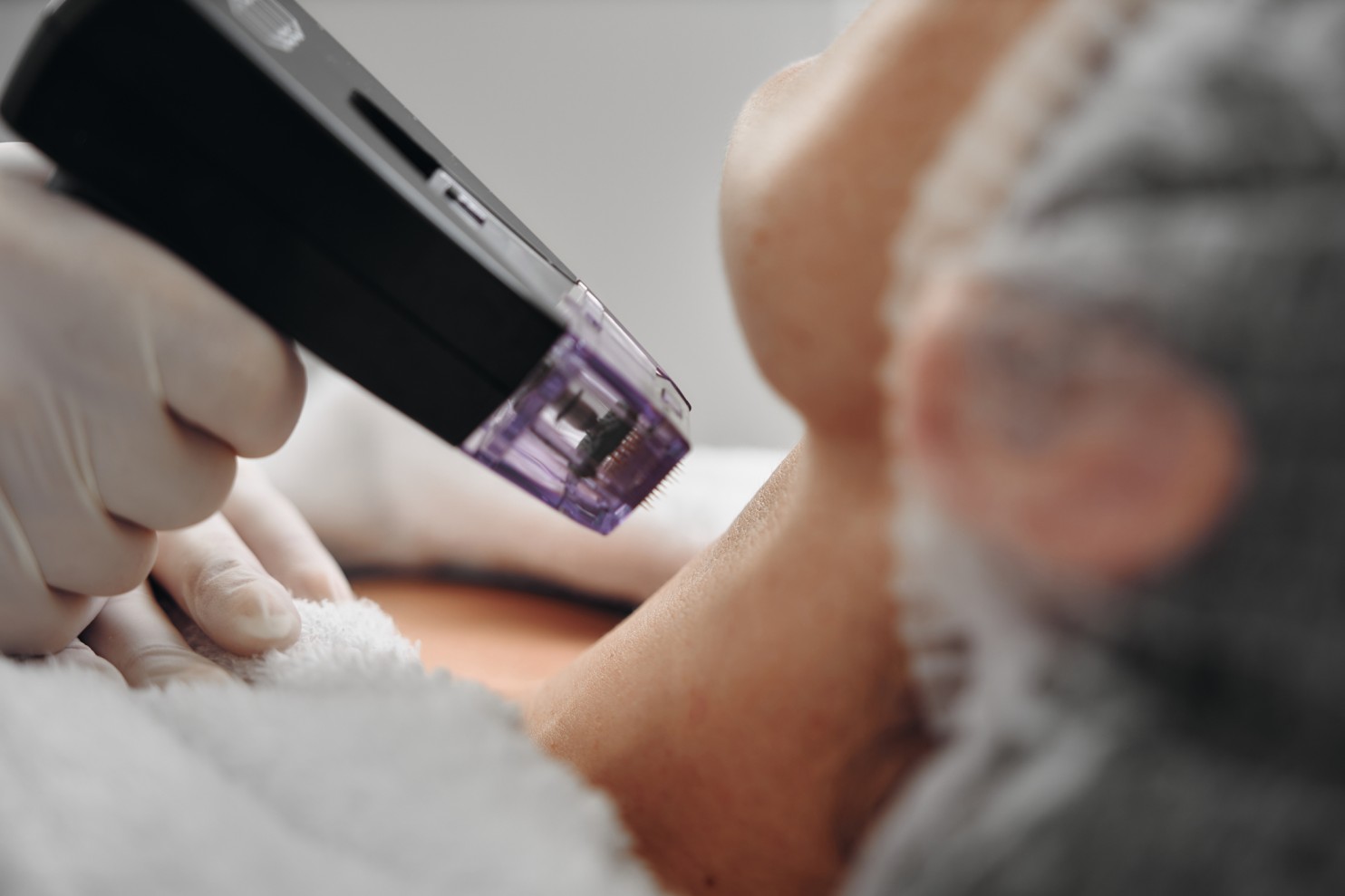
Morpheus8 focuses more on skin texture, collagen stimulation, and superficial tightening, while FaceTite targets deeper tissue contraction.
When facelift procedures become more suitable
Patients with more advanced tissue descent or heavier skin laxity may achieve more predictable results with a facelift rather than relying solely on non-surgical tightening technologies.
Why personalised treatment planning matters
Choosing between FaceTite, Morpheus8, AccuTite, or facelift procedures depends on:
- Skin quality
- Facial structure
- Degree of laxity
- Long-term ageing patterns
This is also why patients exploring rejuvenation options often compare non-invasive and surgical approaches through articles such as Non-Surgical vs Surgical Aesthetic Treatments.
Situations Where FaceTite Alone May Not Be Enough
Moderate-to-severe skin laxity
Patients with heavier sagging may not achieve sufficient lifting from FaceTite alone.
Significant lower-face tissue descent
As ageing progresses, deeper support structures weaken, making surgical lifting more suitable in some cases.
Expectations similar to surgical facelift results
FaceTite can improve contouring and skin tightness, but it does not replicate the structural repositioning achieved through facelift surgery.
Realistic planning creates more natural outcomes
At A.D.S Clinic, treatment recommendations are guided by long-term facial harmony rather than overtightening or excessive slimming.
A More Refined Approach To Jawline Rejuvenation
Patients considering FaceTite often hope to achieve a sharper, more refined jawline without undergoing a full surgical facelift. However, while some patients experience noticeable contour improvement after treatment, others may still see mild jowl formation or less definition than expected. This difference is usually linked to factors such as skin elasticity, collagen response, facial structure, and treatment planning rather than the procedure alone.
At A.D.S Clinic, doctors assess lower-face anatomy carefully before recommending FaceTite, AccuTite, facelift procedures, or complementary treatments such as Morpheus8 to achieve balanced and natural-looking results.